

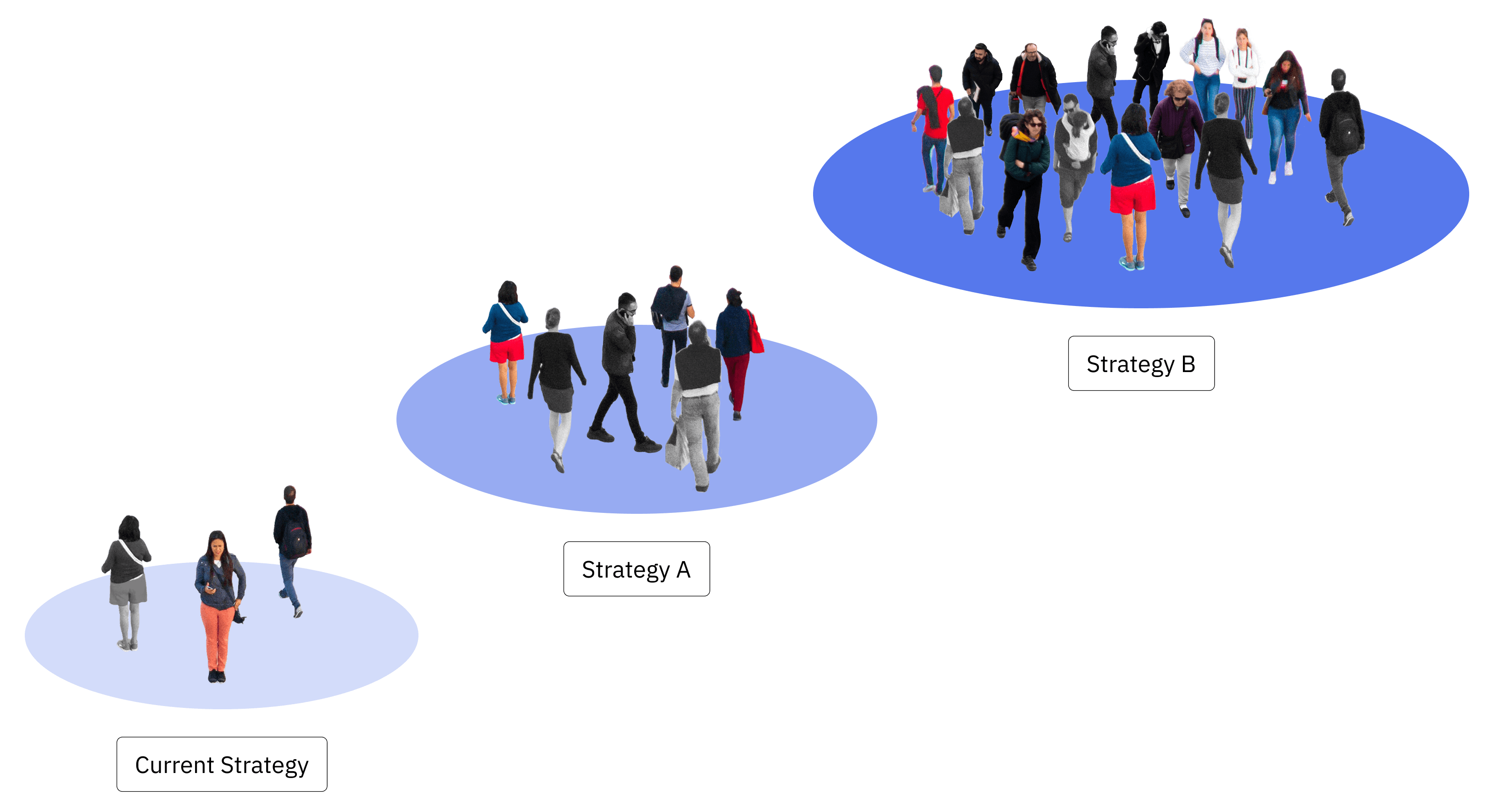
We use advertising platforms as a real-world test bed for experimentation.





We represent competing strategies as live ads and show them to real audiences. Measuring actual clicks and conversions—not stated intent—shows how each audience responds to each strategy.
The result: empirical data that proves you're choosing the right strategy.
Spark No. 9's integrated team of strategists, creatives, and analysts tests and evaluates directions without disruption to current operations.
Results are rigorous, statistically significant, and fast.
Within weeks we can...
Spark No. 9 works with organizations of all sizes—from established to emerging brands—to test the strategies behind their biggest decisions.


















Experimentation, strategy, innovation.